
Radiologists Need Radiation Protection Gloves: Safety Guide
Introduction
Every year, thousands of radiologists, cardiologists, and interventional surgeons expose their hands to harmful scattered X-rays during fluoroscopic procedures. While lead aprons and thyroid shields are standard, the hands often remain unprotected-until recently. Radiation protection gloves have become critical PPE that can reduce extremity dose by up to 95% when used correctly. But why are these gloves necessary? What risks do they mitigate? How should professionals select the right pair? This guide answers these questions and provides a foundational understanding of hand shielding in radiology.
The need for radiation protection gloves stems from the nature of interventional procedures, where physicians work close to the X-ray source. Scatter radiation from the patient can expose the hands to doses that accumulate over time, increasing the risk of skin injuries, cataracts, and cancer. Unlike the torso, which can be shielded by a lead apron, the hands require specialized radiation shielding gloves that maintain tactile sensitivity and dexterity while providing attenuation. In the following sections, we'll explore the science, safety standards, and practical considerations that make radiation protection gloves indispensable in modern medicine.
What Are Radiation Protection Gloves?
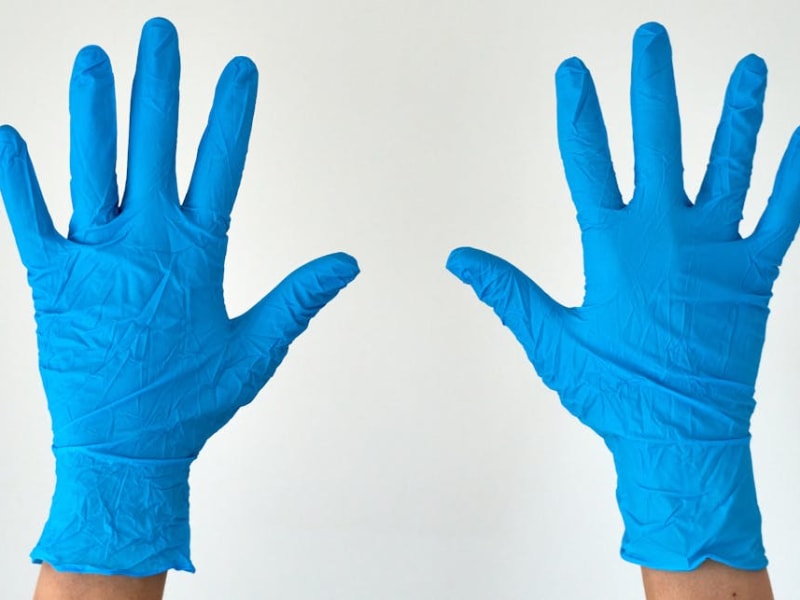
Radiation protection gloves-also known as lead gloves, X-ray shielding gloves, or radiation attenuating surgical gloves-are specialized hand protectors designed to reduce ionizing radiation exposure to the hands during diagnostic and interventional radiology procedures. They incorporate high-density shielding materials-traditionally lead rubber, but increasingly lead-free alternatives such as tungsten or bismuth oxide-into a flexible glove form that allows for precise instrument manipulation.
The primary function of radiation protection gloves is to attenuate scatter X-rays, which are deflected from the patient's body and can deliver significant doses to the physician's hands. These gloves are rated by their lead equivalence (e.g., 0.25 mm Pb, 0.5 mm Pb), which indicates the thickness of lead that would provide the same level of protection. Typical thicknesses range from 0.25 mm Pb equivalent for low-volume diagnostic work to 0.5 mm Pb equivalent for high-volume interventional suites. The gloves are available in various sizes and may be sterile or non-sterile, disposable or reusable, depending on the clinical application.
Construction varies by manufacturer, but most radiation protection gloves consist of an inner liner (often cotton or moisture-wicking material) for comfort, a middle layer of radiation-attenuating compound, and an outer coating that provides grip and durability. Some models feature reinforced fingertips and anti-slip textures to maintain tactile sensitivity during delicate operations. It is important to note that radiation protection gloves are not intended for direct contact with the primary X-ray beam; they protect against scatter radiation only. Using them to position hands in the primary beam-even with gloves-remains unsafe and violates radiation safety principles.
How Do Radiation Protection Gloves Work?
The effectiveness of radiation protection gloves hinges on the principle of radiation attenuation-the process by which X-ray photons are absorbed or scattered as they pass through matter. At the energies typical of fluoroscopy (50-100 kVp), three interactions dominate:
- Photoelectric absorption: The photon's energy is entirely absorbed by an inner-shell electron, which is ejected.
- Compton scattering: The photon transfers part of its energy to a loosely bound outer electron and changes direction, emerging with reduced energy.
- Pair production (only at very high energies >1.02 MeV) is not relevant for diagnostic radiology.
High-atomic-number (Z) materials like lead (Z=82), tungsten (Z=74), or bismuth (Z=83) are particularly effective because their dense electron clouds increase the probability of photoelectric interactions. The shielding effectiveness depends on two factors: material density and thickness. The relationship is exponential-doubling the thickness increases attenuation exponentially, but also adds weight and reduces flexibility. This trade-off is why tactile sensitivity and dexterity become critical; overly thick gloves can hinder procedure performance and actually increase procedure time and overall radiation dose.
A 0.25 mm lead equivalent glove, for instance, attenuates approximately 90% of 75 kVp scatter radiation. Increasing to 0.5 mm lead equivalent raises attenuation to about 98%, but the glove weight may increase from 150 g to 300 g per pair. For physicians performing long, complex interventions, the added weight can cause fatigue and may compromise dexterity. Therefore, selecting the appropriate thickness requires balancing protection with comfort, guided by the anticipated fluoroscopy time and your facility's radiation safety protocol.
Why Are Radiation Protection Gloves Essential for Radiologists?
The Hidden Risk to the Hands
Radiologists and interventionalists are well aware of the cancer and cataract risks associated with chronic radiation exposure. Yet many overlook the hands, which often receive the highest scatter radiation doses during procedures. Without protection, the skin on the back of the hands can absorb doses exceeding 2 Gy per year in busy cath labs-enough to cause deterministic effects such as erythema, epilation, and nail bed changes. More concerning is the stochastic risk: repetitive low-dose exposure increases the lifetime probability of hand skin cancer and may contribute to cataracts when hands are near the head.
Radiation protection gloves directly address this vulnerability by attenuating scatter before it reaches the skin. Furthermore, regulatory bodies and professional societies increasingly recommend or require hand shielding as part of a comprehensive radiation safety program. The ALARA principle (As Low As Reasonably Achievable) mandates using all available means to minimize dose, and gloves are a practical, cost-effective component.
Legal and Ethical Imperatives
Hospitals and clinics have a duty to provide a safe workplace. In many jurisdictions, failure to supply appropriate radiation protection gloves could be considered negligence, especially if an employee develops a radiation-induced injury. Documentation of dose monitoring and PPE provision is essential for compliance with regulations such as the U.S. Nuclear Regulatory Commission (NRC) rules or the European Union's EN 421 standard for protective gloves against ionizing radiation. Beyond legalities, there is an ethical obligation to protect the health of interventional staff who dedicate their careers to helping others.
Lastly, radiation protection gloves contribute to the overall efficiency of an interventional practice. When physicians are confident that their hands are shielded, they can focus entirely on the procedure, reducing stress and potential for error. Improved tactile sensitivity compared to older bulky gloves means surgeons can handle instruments with precision, which can translate to shorter fluoroscopy times and better patient outcomes. In essence, protecting the hands protects both the physician and the patient.

Choosing the Right Radiation Protection Gloves
Selecting the optimal pair involves evaluating several factors:
1. Lead Equivalent Thickness
- 0.25 mm Pb eq.: Adequate for low-volume diagnostic fluoroscopy (< 15 min/month direct exposure).
- 0.35 mm Pb eq.: Suitable for moderate interventional workloads (15-30 min/month).
- 0.5 mm Pb eq.: Recommended for high-volume cath labs (> 30 min/month) or when hands are close to the primary beam.
Consult your facility's radiation safety officer to determine the required thickness based on measured scatter doses.
2. Material: Lead vs. Lead-Free
Traditional lead gloves contain lead oxide in a flexible rubber matrix. They offer excellent attenuation but are heavier and may develop cracks with repeated flexing.
Lead-free alternatives (tungsten, bismuth) provide equivalent radiation attenuation at 40-60% less weight, improving comfort and tactile sensitivity. They also eliminate concerns about lead toxicity during manufacturing and disposal. Many are also latex-free, reducing allergy risks.
3. Fit and Dexterity
Proper fit is crucial. Gloves that are too large reduce tactile feedback and increase the risk of dropping instruments; too small restrict circulation and cause fatigue. Sizing often follows standard medical glove scales (S, M, L, XL), but always refer to the manufacturer's chart. Look for ergonomic designs that mimic natural hand curvature and offer textured fingertips for grip.
4. Sterility and Disposability
For sterile procedures (e.g., surgeries, catheterizations), sterile radiation protection gloves are mandatory. They come individually wrapped and are typically single-use. For non-sterile applications (e.g., reading images, equipment setup), non-sterile reusable gloves can be more economical. Clean and inspect reusable gloves according to the manufacturer's instructions.
5. Standards Compliance
Ensure the gloves meet recognized standards:
- EN 421:2010: EU standard for protective gloves against ionizing radiation.
- IEC 61331-1:2014: International standard for protective devices against medical X-radiation.
- ISO 13485:2016: Medical device quality management.
- FDA 510(k): Clearance for sale in the United States.
Reputable manufacturers will provide documentation of conformity.
Proper Use and Maintenance
Even the highest-quality radiation protection gloves will fail to provide adequate protection if misused. Follow these guidelines:
- Inspect before each use: Look for cracks, tears, pinholes, or signs of wear. A simple test is to hold the glove up to a bright light; any light penetration indicates damage.
- Avoid direct primary beam: Never place gloved hands in the direct X-ray beam path. Radiation protection gloves are designed for scatter only.
- Store properly: Keep gloves flat or loosely rolled in a cool, dry place away from direct sunlight and sharp objects. Avoid creasing, which can create stress points.
- Replace regularly: Even with proper care, materials degrade. A typical lifespan is 2-3 years for reusable gloves, depending on usage. Disposable gloves are discarded after each use.
- Use in conjunction with other PPE: Gloves complement-not replace-lead aprons, thyroid shields, and lead glasses. Full-body protection is the goal.
Conclusion
Radiation protection gloves have become an indispensable tool for radiologists, cardiologists, and surgeons who work with fluoroscopy and other X-ray-based modalities. By attenuating scatter radiation, they safeguard the hands from both deterministic injuries and long-term cancer risks. Choosing the right pair—considering lead equivalence, material, fit, and standards—and using them correctly are essential steps toward a culture of safety. As interventional volumes continue to rise, protecting the hands is not just advisable; it's a professional responsibility. Equip your team with quality radiation protection gloves and ensure they are integrated into your facility's radiation safety program. Your hands are your most valuable instruments—protect them.