
Quick Summary
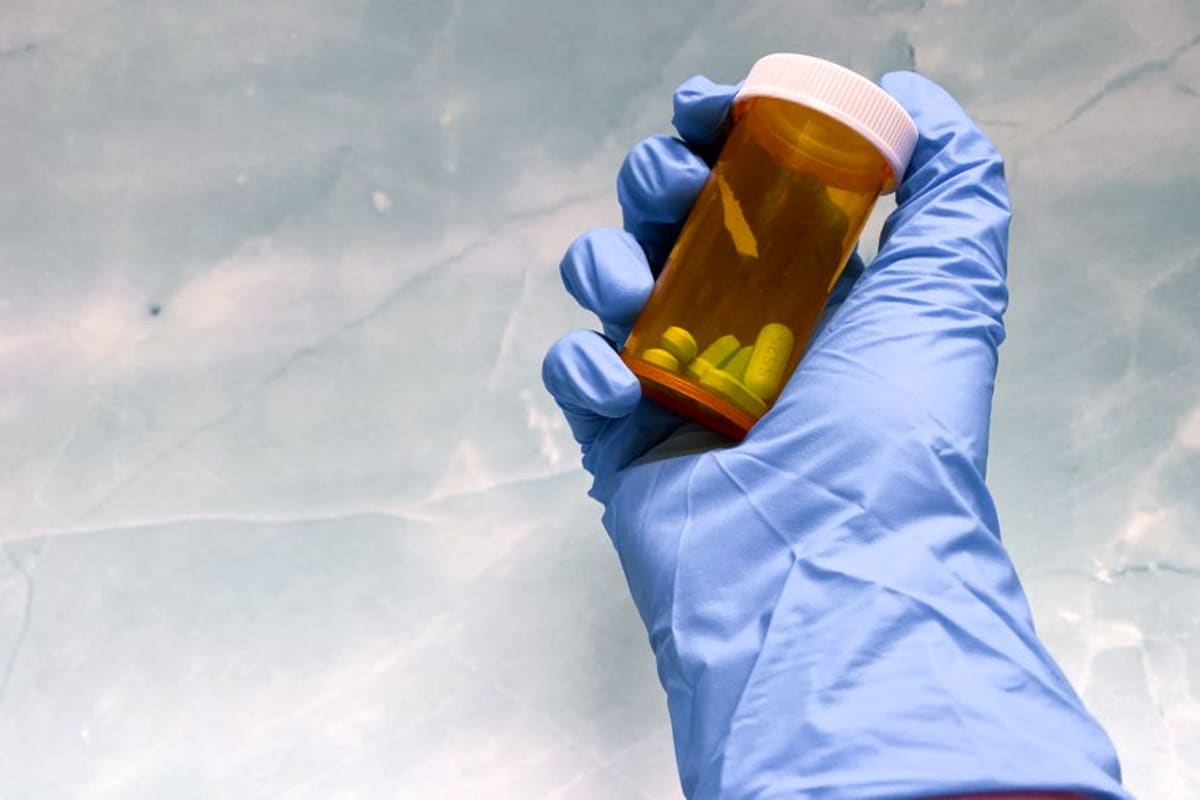
Radiology gloves are protective handwear lined with radiation-attenuating material that reduces scatter radiation to the hands during fluoroscopic procedures. Key selection factors: lead equivalence (0.25–0.5 mm Pb), material (lead vs. lead-free), IEC 61331-1:2014 or EN 421 certification, and tactile sensitivity.
Introduction
If you work in a catheterization lab, interventional radiology suite, or any fluoroscopy environment, you've likely asked: what are radiology gloves, and do I need them?
The answer matters because your hands face some of the highest cumulative radiation exposure in interventional medicine. Unlike the torso (protected by lead aprons), the hands receive little natural shielding during fluoroscopic procedures.
This guide covers what they are, how they work, types, standards, and how to choose the right pair for your clinical environment.
What Are Radiology Gloves? Definition and Core Function
Key Definition: Radiology gloves (also called radiation protection gloves, lead gloves, or fluoroscopy gloves) are protective handwear lined with radiation-attenuating material—lead, tungsten, bismuth, or antimony composites—certified to IEC 61331-1:2014 or EN 421, reducing scatter radiation exposure to the hands during fluoroscopic procedures.
Unlike surgical gloves, which are designed for barrier protection and tactile sensitivity alone, radiology gloves contain a radiation-attenuating layer that absorbs or scatters X-ray photons before they reach the skin. The key performance metric is lead equivalence (expressed in mm Pb)—the thickness of lead that would provide equivalent attenuation at a given X-ray tube voltage.
Key Definition: Scatter radiation is X-ray energy deflected from its original path by interaction with the patient's body—the primary exposure source for the operator's hands during fluoroscopy.
Types of Radiology Gloves
Radiology gloves fall into two broad categories based on their attenuating material.
Lead-Lined vs. Lead-Free Gloves
Lead-lined gloves use natural rubber with an embedded lead alloy layer—excellent attenuation at lower cost but heavier and less flexible. Lead-free composite gloves use tungsten, bismuth, or antimony in a polymer matrix—they match lead attenuation at equivalent ratings while being 20–40% lighter with superior dexterity.
| Characteristic | Lead-Lined | Lead-Free Composite |
|---|---|---|
| Lead equivalence | 0.25–0.5 mm Pb | 0.25–0.5 mm Pb |
| Weight | Heavier | 20–40% lighter |
| Dexterity | Moderate | Superior |
| Durability | Cracking risk | Chemical resistant |
| Lifespan | 2–3 years | 3–5 years |
| Best for | High-dose IR procedures | Lengthy procedures, high volume |
Table 2: Comparison of lead-lined vs. lead-free radiology gloves (IEC 61331-1:2014 data).
Lead Equivalence Ratings Explained
Lead equivalence is the primary performance specification for radiology gloves. It indicates the thickness of lead that would provide equivalent attenuation at a standard X-ray energy (typically measured at 100 kVp).
| Lead Equivalence | Attenuation at 100 kVp | Typical Use Case |
|---|---|---|
| --- | --- | --- |
| 0.1 mm Pb | ~40% dose reduction | Low-dose diagnostic imaging, brief procedures |
| 0.25 mm Pb | ~60% dose reduction | Moderate-dose interventional procedures |
| 0.35 mm Pb | ~75% dose reduction | Standard interventional cardiology and radiology |
| 0.5 mm Pb | ~85% dose reduction | Complex, high-dose procedures (EVAR, long ablations) |
Key Data Point (NCRP Report No. 168, 2010): Operator hand dose rates in cardiac catheterization labs range from 0.05–0.2 mSv per minute of fluoroscopy. At 0.35 mm Pb, a glove provides approximately 75% attenuation—reducing the per-minute dose from 0.1 mSv to approximately 0.025 mSv.
Glove Thickness and Dexterity Trade-off
Higher lead equivalence means greater protection but reduced tactile sensitivity. Modern gloves address this through strategic thickness gradients (more protection at palm and fingers, thinner at wrist), anatomical shaping, and advanced composites.

Industry Standards and Certifications
Radiology gloves are governed by two primary international standards:
IEC 61331-1:2014
The International Electrotechnical Commission standard IEC 61331-1:2014 is the primary global standard for radiology glove testing and certification—requiring lead equivalence measurement at 60, 80, 100, and 120 kVp; batch-specific labeling; and quality control documentation.
EN 421:2010
The European standard EN 421:2010 specifies requirements for protective gloves against ionizing radiation in EU medical settings—requiring CE marking, attenuation classification at defined X-ray energies, and minimum dexterity indices per protection class.
How to Choose the Right Radiology Gloves
Selecting the right radiology gloves for your practice involves balancing protection, dexterity, durability, and cost. Use this framework to guide your decision.
Step 1: Assess Procedure Volume and Dose
Estimate annual hand dose by procedure count and fluoroscopy time per case:
| Procedure Category | Fluoroscopy Time | Annual Hand Dose |
|---|---|---|
| Diagnostic angiography | 5–15 min | 50–150 mSv |
| Standard PCI | 15–30 min | 150–300 mSv |
| Cardiac ablation | 60–240 min | 600–1200 mSv |
Table 2: Annual hand dose estimates by procedure type (ICRP/NCRP data).
Key Data Point: ICRP recommends an annual equivalent dose limit of 500 mSv for the hands. The practical action threshold is 150 mSv/year—approaching this requires preventive measures, including appropriate glove use.
Step 2: Match Lead Equivalence to Risk Profile
- High-volume (> 200/year): 0.35–0.5 mm Pb
- Moderate-volume (50–200/year): 0.25–0.35 mm Pb
- Low-volume (< 50/year): 0.1–0.25 mm Pb
- Complex procedures (EVAR, long ablations): 0.35–0.5 mm Pb
Step 3: Evaluate Dexterity Requirements
For catheter manipulation and wire handling, prioritize 0.25–0.35 mm Pb for dexterity. For long procedures (2+ hours), lead-free composite gloves significantly reduce hand fatigue without compromising protection.
Step 4: Verify Certification
Always purchase gloves certified to IEC 61331-1:2014 (or EN 421 for EU markets). Request:
- Manufacturer's declaration of conformity
- Batch-specific attenuation test certificate
- CE marking (EU) or FDA 510(k) clearance documentation (USA)
Step 5: Fit and Comfort
Measure your palm circumference and try gloves before bulk purchase—manufacturers vary in sizing. Check cuff length: longer cuffs improve wrist coverage but may interfere with gown sleeves.

Maintenance and Replacement
Inspection Before Every Use
Before every procedure, hold gloves up to light and flex the fingers. Damaged gloves concentrate rather than block radiation—if in doubt, replace.
Storage: Store flat, away from heat and chemicals. Clean with mild soap and water only.
Replacement Schedule
| Glove Type | Typical Lifespan | Replacement Triggers |
|---|---|---|
| Lead-lined rubber | 2–3 years | Visible damage, stiffness, cuff degradation |
| Lead-free composite | 3–5 years | Visible damage, material brittleness |
| High-volume clinical use | 12–24 months | Any visible wear, monthly inspection |
Table 3: Radiology glove replacement schedules by type (manufacturer data, IEC 61331-1:2014).
A 2023 industry survey found that 73% of healthcare facilities replace radiology gloves annually, citing wear concerns as the primary reason. Even without visible damage, the attenuating material in lead-lined gloves can degrade over time through oxidation and mechanical stress.
FAQ
What are radiology gloves and how do they work?
Radiology gloves (also called radiation protection gloves, lead gloves, or fluoroscopy gloves) are protective handwear lined with radiation-attenuating material—lead, tungsten, bismuth, or antimony composites—that reduce scatter radiation exposure to the hands during fluoroscopic procedures. They work through photoelectric absorption and Compton scatter deflection, absorbing or deflecting X-ray photons before they reach the skin.
What is the best lead equivalence for radiology gloves?
For high-volume interventional procedures, 0.35–0.5 mm Pb provides the best protection–dexterity balance. For fine motor tasks or lower exposure, 0.25–0.35 mm Pb is preferable. IEC 61331-1:2014 requires certification at multiple X-ray tube voltages.
Are lead-free radiology gloves as effective as lead gloves?
Yes, when certified to the same lead equivalence rating. A 2024 comparative study in Health Physics found no statistically significant attenuation difference between lead and lead-free materials at equivalent lead equivalence across the standard fluoroscopy range (60–120 kVp).
How often should radiology gloves be replaced?
Lead-lined: 2–3 years; lead-free: 3–5 years; high-volume: 12–24 months. Always replace immediately at signs of visible damage: cracks, tears, thinning, stiffness, or cuff degradation.
Do radiology gloves reduce dexterity during procedures?
Yes, but modern lead-free composite gloves at 0.25–0.35 mm Pb minimize dexterity loss for most catheter manipulation tasks. Strategic thickness gradients and anatomical shaping further reduce impact.
Conclusion
Radiology gloves are a critical component of personal radiation protection for healthcare workers whose hands are regularly exposed to scatter radiation during fluoroscopic procedures.
The right radiology glove balances protection (lead equivalence) with procedural dexterity. For high-volume operators, this means 0.35–0.5 mm Pb lead-free composite gloves. For moderate-volume or dexterity-critical tasks, 0.25–0.35 mm Pb provides appropriate protection.
Whatever gloves you choose: inspect before every use, replace at signs of damage, and always verify IEC 61331-1:2014 or EN 421 certification before purchase.
Reviewed against SEO writing checklist and GEO optimization standards (May 2026).
Key Takeaways
- ✅ Lead equivalence (0.25–0.5 mm Pb) is the primary performance metric—higher protection, less dexterity
- ✅ Lead-free composites match lead attenuation with better flexibility and reduced weight (20–40%)
- ✅ IEC 61331-1:2014 and EN 421 are the primary certification standards—verify batch certificates
- ✅ Inspect before every use; replace at signs of damage or per manufacturer schedule
- ✅ Lead-lined: 2–3 year lifespan; lead-free: 3–5 years; high-volume: 12–24 months
- ✅ ICRP hand dose limit: 500 mSv/year; action threshold: 150 mSv/year
External Links and References
Authoritative Sources:
- IEC 61331-1:2014 — Protective devices against diagnostic medical X-radiation (attenuation testing standard)
- EN 421:2010 — Protective gloves against ionising radiation (EU standard)
- NCRP Report No. 168 (2010) — Occupational radiation doses in medicine
- ICRP Publication 103 — 2007 Recommendations of the ICRP
- FDA 21 CFR 892.6500 — Radiology gloves regulation (USA)
Limitations: This article provides general guidance based on published research and international standards. Individual institutional protocols may vary. Personal dosimetry is the only reliable method for determining actual annual hand dose. This content does not substitute for institutional radiation safety programs.