

****
How Do Radiation Protection Gloves Work? The Science of Hand Shielding
Introduction
Radiation protection gloves are a critical component of personal protective equipment (PPE) in modern healthcare environments where ionizing radiation is routinely used. These specialized gloves, commonly referred to as lead radiation gloves or x-ray protection gloves, serve as the primary line of defense for healthcare workers' hands during fluoroscopy-guided procedures, interventional radiology, and cardiac catheterization. Understanding how radiation shielding gloves function requires a deep dive into the physics of radiation attenuation and the materials science that makes protective hand shielding possible.
The fundamental purpose of radiation protection gloves is to reduce occupational radiation exposure to the hands—areas often overlooked when focusing on apron and thyroid shielding. During fluoroscopic procedures, scatter radiation can expose interventional radiologists, surgeons, and cath lab staff to cumulative doses that may lead to radiation-induced skin injuries, cataracts, and increased lifetime cancer risk. The International Commission on Radiological Protection (ICRP) recommends a dose limit of 500 mSv per year for extremities; without proper hand shielding, this threshold is easily exceeded in high-volume interventional suites. Radiation safety protocols mandate the use of appropriate shielding, and modern lead gloves for radiology have evolved to balance protection with tactile sensitivity—a crucial factor for precision medical work.
This comprehensive guide explores the science behind how radiation protection gloves work, from the principles of radiation attenuation to practical considerations for selecting the right pair for your medical practice. Whether you're a radiology technician, interventional cardiologist, or hospital procurement manager, understanding the technology, standards (including EN 421), and real-world applications of radiation protection gloves is essential for maintaining a safe clinical environment while delivering optimal patient care.
What Are Radiation Protection Gloves?
Radiation protection gloves, also known as lead-equivalent gloves or radiation attenuating surgical gloves, are designed with integrated shielding materials that absorb ionizing radiation—primarily x-rays—before it reaches the skin. Unlike standard surgical gloves that provide barrier protection against biological contaminants, radiation gloves incorporate high-density materials such as lead, tungsten, or bismuth compounds into the glove matrix or as a flexible inner lining. These materials are chosen for their high atomic number, which increases the probability of photoelectric absorption—the primary attenuation mechanism at diagnostic x-ray energies.
The effectiveness of any radiation shielding glove is expressed as "lead equivalent" thickness, typically measured in millimeters. Common specifications include 0.25mm Pb equivalent and 0.5mm Pb equivalent. This measurement indicates how much lead would be required to provide the same attenuation as the glove material. For instance, a 0.25mm Pb eq. glove blocks approximately 90-95% of scattered radiation in the 70-120 kVp range commonly encountered in diagnostic fluoroscopy. Higher thickness ratings offer greater protection but can reduce dexterity and increase hand fatigue during lengthy procedures. Importantly, attenuation is energy-dependent; the same glove provides less protection at higher kVp, so matching glove rating to equipment output is essential.
Modern radiation protection gloves come in several configurations: reusable gloves with built-in shielding layers that can withstand repeated cleaning; disposable sterile versions for single-use applications to maintain sterility during invasive procedures; and flexible "lead-free" alternatives that use non-lead attenuating materials to address environmental and toxicity concerns. The choice among these types depends on the specific application, required barrier sterility, institutional protocols, and cost considerations. Radiation gloves complement—but do not replace—other shielding like aprons, thyroid collars, and ceiling-mounted barriers; they are one component of a comprehensive radiation protection strategy that also includes distance and time minimization.
How Does Radiation Attenuation Work?
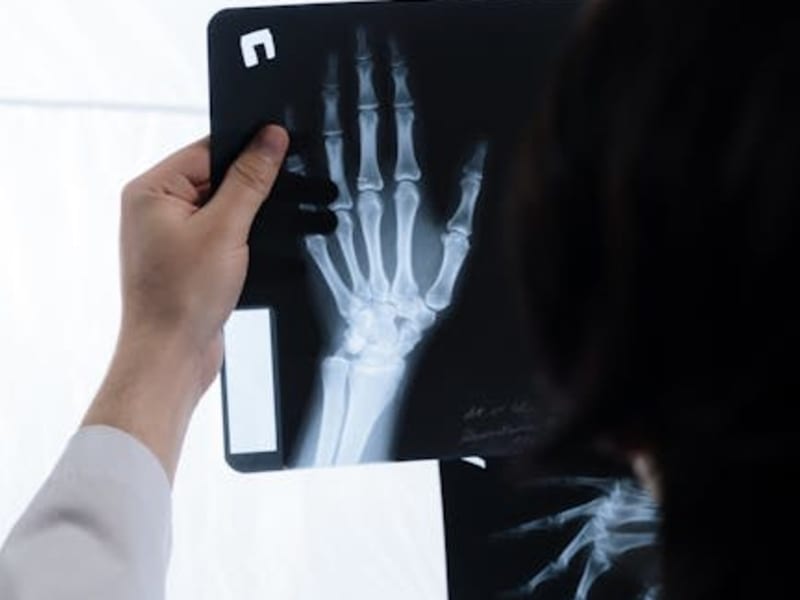
Radiation shielding in gloves relies on attenuation—the reduction of x-ray intensity as it passes through matter. For medical imaging energies (30-150 kVp), two mechanisms dominate: the photoelectric effect (photon transfers all energy to an electron and is absorbed) and Compton scattering (photon transfers partial energy and deflects). Both are enhanced by high atomic number materials such as lead (Z=82), tungsten (Z=74), and bismuth (Z=83)—the core components of most lead-equivalent gloves.
Modern gloves combine a flexible outer barrier (latex/nitrile) with an inner layer of attenuating material. Some designs place shielding only on the dorsal hand where scatter exposure is highest, preserving fingertip sensitivity. The EN 421 standard defines testing methods to certify that gloves meet their stated lead-equivalent ratings across clinically relevant x-ray energies. It's crucial to match glove thickness to your fluoroscope's maximum kVp: higher energy requires thicker shielding.
Radiation shielding is energy-dependent. The same glove thickness provides different protection at 50 kVp versus 120 kVp. For high-energy fluoroscopy (often exceeding 90 kVp), thicker gloves or supplemental shields become necessary. This energy dependence means facilities must carefully match glove specifications to their equipment's output.
Balancing Protection and Dexterity
Designing effective radiation protection gloves requires preserving tactile sensitivity for fine motor tasks. Traditional thick lead gloves can hinder precision. Modern designs address this through flexible tungsten-bismuth composites, strategic shielding placement (dorsum only), and pre-curved anatomical shaping. Some products use dual-thickness construction—thicker on the back, thinner on palms and fingertips—to optimize protection where needed while maintaining tactile feedback.
The trade-off between protection and dexterity is unavoidable. Higher lead-equivalent values (0.5mm vs 0.25mm) may slightly reduce sensitivity but offer better attenuation. Facilities should involve end-users in glove selection and conduct hands-on trials to ensure the model meets both safety and performance requirements. Poor dexterity can prolong procedure time and actually increase radiation exposure to both patient and operator, undermining the protective intent.
Clinical Applications
Radiation protection gloves are essential in medical specialties that use fluoroscopy:
- Interventional Radiology: IR procedures like angiography and embolization involve prolonged fluoroscopy. Gloves (often 0.5mm Pb eq.) are used with ceiling shields and under-table drapes.
- Cath Lab: Cardiac catheterization operates at high tube currents; 0.5mm Pb eq. gloves are standard PPE for all personnel.
- Orthopedic Surgery: Fluoroscopy-guided spine and joint surgeries use thin gloves (0.25mm) to allow tool handling while protecting hands.
- Pain Management: Epidural and facet injections require needle precision; lightweight gloves (0.25mm) are preferred for lower-dose procedures.
- Vascular Surgery: Hybrid OR procedures use fluoroscopy for stent placement; radiation gloves are increasingly standard.

Choosing the Right Gloves
Key selection factors include:
- Thickness: Match to your typical fluoroscopy kVp. 0.25mm Pb eq. suits diagnostic work; 0.5mm for interventional. Always verify EN 421 certification.
- Sterility: Invasive cases require sterile gloves (single-use or sterilizable). Non-sterile options work for diagnostic studies.
- Material: Lead gloves are economical; lead-free alternatives (tungsten/bismuth) avoid toxicity and may be more flexible. Both provide comparable protection when properly rated.
- Fit and ergonomics: Proper sizing is critical. Look for textured fingertips, anti-slip palms, and pre-curved fingers to reduce fatigue.
- Durability: Reusables should be inspected before each use for cracks or delamination. Even with care, most last 3-5 years.
Frequently Asked Questions
Do radiation protection gloves really work?
Yes. Certified gloves (EN 421, IEC 61331-3) provide measured attenuation. A 0.25mm Pb eq. glove blocks ~90-95% of scatter at 100 kVp. However, gloves are just one component of radiation safety; distance, fixed shielding, and time reduction remain essential.
Why do hands specifically need protection? Aren't aprons enough?
While lead aprons protect the torso, the hands often remain closest to the primary beam and receive significant scatter. Hand skin is thin and sensitive, vulnerable to radiation-induced injuries and long-term cancer risk. Cumulative hand exposure over years can lead to cataracts and skin cancer. Dedicated hand shielding via radiation gloves is thus a critical addition to PPE.
How do I choose the right thickness?
Match glove thickness to your fluoroscope's maximum kVp. 0.25mm Pb eq. works for diagnostic procedures (70-90 kVp). For interventional work at 90-120 kVp, choose 0.5mm Pb eq. Consult your radiation safety officer for facility-specific recommendations based on typical dose rates.
Can disposable gloves be reused?
No. Disposable radiation gloves are single-use only. Reusing them risks infection control breaches and compromised shielding from undetectable micro-tears. Reusable models are engineered for multiple uses but require inspection before each use for cracks, tears, or delamination. Follow manufacturer guidelines for cleaning and replacement.
Do gloves protect against gamma radiation?
Radiation protection gloves are optimized for diagnostic x-ray energies (up to 150 kVp). They offer limited protection against high-energy gamma rays, which require denser, thicker shielding. Always verify the energy range for which your gloves are certified.
How often should I replace reusable gloves?
Replace immediately if any damage is visible (cracks, tears, delamination, stiffening). Even undamaged gloves should be replaced every 3-5 years, as material properties degrade over time. Regular QA checks with your fluoroscopy system can verify continued performance.
How can I verify that my radiation gloves meet the claimed protection level?
Look for explicit markings on the glove packaging or the glove itself stating compliance with EN 421 (European standard) or IEC 61331-3 (International standard). Reputable manufacturers provide a certificate of conformity from an accredited testing laboratory. The glove should indicate its lead-equivalent thickness and the energy range for which it is certified (e.g., "0.5mm Pb eq. @ 100 kVp"). If in doubt, contact the manufacturer for test reports. Some facilities conduct their own quality assurance checks using fluoroscopic phantoms and dosimeters to measure attenuation. Never rely solely on marketing claims—independent certification is essential.
Conclusion
Radiation protection gloves are indispensable for any healthcare professional working near fluoroscopy equipment. By understanding the science of radiation attenuation—the role of lead-equivalent materials, EN 421 standards, and the balance between protection and dexterity—you can make informed choices that safeguard your hands without compromising patient care. Select gloves that match your procedure's radiation dose, prioritize fit and tactile sensitivity, and always practice comprehensive radiation safety. Your hands are your livelihood; protect them with quality radiation shielding.